

Take a moment to pause and experience the stories of our seniors, shared through their voices and art, reflecting on their lives and the progress Singapore has made over the past 60 years.

A guiding light, a nation’s start,
Through steady hands and hopeful heart,
Of a future bright with dreams in sight,
A land dreamed equal and free
Artist:
Artist Ying

Hello everyone, I’m Low Lay Hong, and I’m 71 this year. My dear grandchildren, I would like to tell you a story today.
You know how you play so naturally with friends of all races now? Back when I was a child, things were very different. Singapore had just become independent, and there were racial riots and curfews going on.
At that time, I was still very young. I didn’t really understand what was happening. I only remember peeking out the window and seeing policemen patrolling with batons. Every evening, we would hear a radio broadcast called Rediffusion Voice. The announcer kept repeating the words “curfew hours,” reminding everyone to stay indoors. I was scared, and I asked my mother what was going on. But she only said, “Lay Hong, you’re still young. Don’t ask too much. Just remember to come home early.”
It wasn’t until I entered secondary school and started reading the newspapers that I finally began to understand what had happened back then. That was also when I came to appreciate what our founding Prime Minister, Mr Lee Kuan Yew, meant when he spoke about the importance of racial harmony.
You see, the pledge you recite every morning in school, ‘regardless of race, language or religion, to build a democratic society based on justice and equality’, reminds us that our peace and harmony did not come easily. It is something we must treasure and protect.
Now that I’m 71, I still believe deeply in this. To live in a country where people of all races can learn, work and grow together is a blessing. So remember this, my little ones: harmony does not happen by chance. It happens when we care for one another.

From kampung’s humble, thatched-roofed grace,
Came laughter bright and hearts so pure.
Those days are gone, yet not replaced,
The warmth we knew still will endure.
Artists:
Ang Lee Lee, Arfah Binte Bujang, Hanisah Binte Abdul Rahim, Leong Hoy Ying, Ler Eng, Lim Yam Guek, Loh Jee Lan, Low Sock Em, Soon Quek New @ Soon Jay Jee, Umi Kalsom Binte Setat, Woo Wee Chin, Artist Ying

Hello everyone, I’m Nelson, and I’m 71 this year.
Back in the 1960s, we lived in what we fondly called the kampung. It was more than just a place to stay; it was home to all my childhood memories. Coconut trees swayed in the breeze, and the sounds of roosters and dogs made up our daily symphony.
In the village, water and electricity were limited. Everyone shared the same taps to wash clothes or bathe, and at night we lit kerosene lamps. Most of us lived in attap or wooden houses, with roofs made of palm leaves or zinc sheets. During the day, our doors were always open. Children ran freely in and out of each other’s homes. There were no fences, only what we called “walls of friendship”. Everyone trusted and cared for one another. The whole village felt like one big family.
My childhood in the kampung remains one of the most unforgettable times of my life. Life was simple and not luxurious, but looking back, it was truly precious. We children spent our days playing in the mud, drains and grassy fields, skipping rope, tossing pebbles, watching cockfights, blowing bubbles and even making up our own games. We ate what we grew and what we raised, vegetables from our garden and chickens and ducks from our backyard.
My mother was the heart of our home. She was a farmer, a butcher and a homemaker all in one. She planted vegetables, slaughtered chickens and managed every household chore. She handled everything by herself and was our family’s pillar of strength.
My father was a trishaw rider. He left home before dawn and returned only at dusk. To support ten children, he worked tirelessly under the hot sun, his skin tanned dark from the years of labour. I remember that after my second brother was born, my father started riding the trishaw, and he kept at it until he finally retired at 75. He worked hard all his life without complaint, and I will always be grateful to him.
Although life was poor, warmth and kindness were everywhere. I still remember one night when a sudden tropical storm tore through our village and destroyed several wooden houses. The worst hit was old Madam Tan, who lived in the middle lane. Her entire house collapsed, leaving only a single chair standing in the rubble.
The next morning, without a word, the men in the kampung sprang into action. Everyone brought whatever tools they had, hammers, wood, nails, and began rebuilding her house together. No one stood aside. Everyone helped, and within three days, Madam Tan had a new home, stronger and cosier than before. I still remember her sitting on the steps of her new house, tears in her eyes, filled with gratitude.
That, to me, is the true kampung spirit. A spirit of selflessness and mutual help, a bond between neighbours who care for one another, and a deep sense of warmth and belonging that lives in everyday life.
By the late 1960s, when the government began building public housing, the kampungs slowly disappeared. But the people, the friendships and the simple, heartfelt way of life from those days have stayed with me ever since. They remain a part of me that I will never forget.

My name is Badurunnisa and I am 65 years old. I used to live in a big landed property house back in 1968 in a kampong. There were 12 rooms in the house. My parents, siblings and myself rented 1 room and lived there. We did everything from cooking to sleeping in that 1 room. We had to go outside to a specific area for toileting and showering. Only 1 person can shower or go toilet at a time. There was a water pump for washing clothes and everyone will take turns to use it. Some of the other residents will also shower at the pump. If really urgent the person has to go the jungle for toilet.
There were many Indians and about 5-6 chinese people living in the house. Only 3 families had TV and telephones. We children will watch tv on Thursdays and Fridays in 1 of the rooms. As we were poor, we did not have TV or telephone. The roads around the house were red.
As children, we used to play games like 5 stones, masak masak, goli, spider catching, cycling, rubber bands, chapteh, Jaylon, hide and seek, climbling trees and many more. We used to eat ice cream, kaya butter toast, Bengali cake, roti, all these the uncles will come in bicycles and ring their bells to sell.
The only time we went to our room is to eat and sleep, other times we are always outside playing and talking with the rest. The children will be playing outside, the adults will be doing their housework like washing clothes, folding clothes, cooking. Everyone will be doing all these together and share each others’ work or food. They will only go inside when it rains.
That life was beautiful and wonderful. Even now I miss that life very much. Later in the 1970, we move to a house near the beach shore , there were more Malays there and 1-2 chinese and no Indians. Here also we stayed outside most of the days, going home only to eat and sleep. We moved to Taman Jurong in 1972 under the JTC housing scheme. It was also 1 room with kitchen. It was a 12 storey flat and we lived on the 4th floor.
One memory of this place; there was a Chinese man who brought a pail with cover and told us to put the leftover food in it. Everyone followed this, once the pail is filled he will bring it away and give 10 eggs or vegetables in return. These are some of the childhood memories of my life. Thank you and I hope that it can be a learning lessons for the future generations.
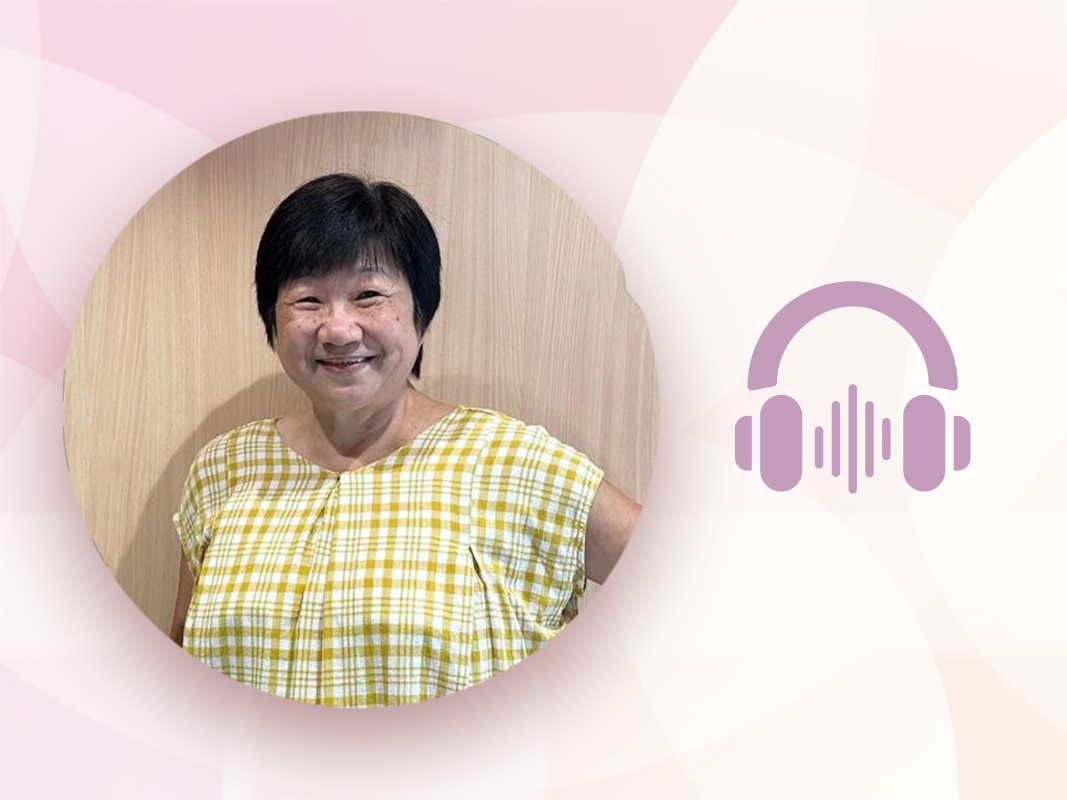
Hello everyone, I am Yeo Lay Geok, and I am 71 years old this year. In the blink of an eye, Singapore has already come through 60 years. Today’s Singapore is prosperous and stable, with high-rise buildings everywhere. Most people live in HDB flats, enjoying a life that is both convenient and comfortable.
However, when I was young, our family lived in an attap house in a kampong. Although life was simple, we lived peacefully and contentedly.
The most unforgettable memory of my childhood was a night in July 1964. I was only 10 years old that year, yet I personally experienced one of the most severe racial riots in our nation’s history.
Early that morning, my parents rushed home in a hurry from the pasar (market). The expression on their faces was extremely tense, which made us feel very uneasy. As soon as they entered, they said, “No school today, and no one is allowed to step outside!” After saying that, they immediately closed all the doors and windows tightly and kept anxiously looking outside, fearing any signs of trouble. At that moment, I felt fear for the very first time.
It turned out that racial riots had broken out in Singapore, and rumors were spreading everywhere about Chinese and Malays attacking each other. Everyone was in panic. What worried my family the most was my second older sister, who had not yet returned from school. My parents prayed incessantly to the deities and ancestors, hoping she would return safe and sound.
After dark, the entire kampong became eerie and quiet. Because the neighboring village was a Malay kampong, it would be extremely dangerous if a conflict broke out. To protect the village’s safety, the adults automatically gathered to take turns keeping watch through the night. Some held wooden sticks, while others carried iron buckets. If there was any movement, they would immediately beat the iron buckets to warn one another. We were also instructed to flee immediately if danger arose.
Even to this day, I still remember the scene of that night. As I lay in bed, the sound of iron buckets being struck and the low voices of adults talking occasionally reached my ears. My heart was filled with tension and fear, making it impossible to fall asleep.
Fortunately, our kampong remained safe and peaceful that night, and my second older sister returned home safely as well. Although everything eventually returned to calm, I will never forget that terror and anxiety for the rest of my life.
This experience made me understand that national stability and racial harmony cannot be taken for granted. It requires tolerance, respect, and unity from all of us. Children, you are truly fortunate. Singapore’s ability to be so stable and harmonious today is not only due to the government’s efforts, but also the fruit built step-by-step by our generation after enduring turbulence and unrest. I hope you can cherish this hard-won stability and continue to safeguard it for our next generation.

Where wood once stood, concrete flats rise;
Clean water flows and lights now gleam.
With schools and markets nearby,
A modern life sparks a new dream.
Artists:
Bay Seok Kheng, Cham Seng Yin, Cher Yong Kim, Chia Gek Tiang, Chow Yoke Ching, Doreen Chong Moy Lan, Ho Huang Eng, Ho Kwan Oi, Ho Pui Sim (Tracy), Kwan Yuet Ming, Lee Man Oie, Lee Woon Yong, Lim Sin Tuan, Lo Chee Yong, Linda, Margaret Low Mei Ling, Ng Lai Koon, Pang Puay Sum, Sabapathy Antoinette Ann, Sia Siew Lia, Soh Kok Tee, Tan Han Yong, Tan Mui Eng, Jeannie, Tham Wai Fong, Thio Bee Choo, Artist Ying

Hi everyone, I’m Koh Yew Mun and I’m 78 this year.
Dear wife, look at our home. Isn’t it wonderful? Being able to live here peacefully with you, our children and our grandchildren makes me truly happy.
When I was a child living in the kampung, I was about eight or nine years old when a big fire broke out. Our house was completely destroyed. Thankfully, everyone in the family was safe.
Not long after that, my mother told me, “Yew Mun, we are not staying in the kampung anymore. We are moving into the government flats.”
At first, it felt strange. I was young and not used to it. The neighbours seemed distant, and I missed the warmth of the kampung. But soon, I realised that life in the flats was actually very convenient and comfortable. We had clean running water at home, so my mother no longer had to wash clothes by the well. And the best part was that I no longer had to deal with the dirty and smelly public toilets. I remember thinking how much better life felt here, and how it gave us a sense of dignity.
From that very first flat to the one we live in now, so much has happened. Then I met you, and after we got married, we built our own home together. Without realising it, I have already reached 78. Over these decades, the flats we have lived in have held so many memories. We raised our children, watched them grow up, and now our grandchildren run around the same space, filling it with laughter. Our neighbours have become like family. Everyone looks out for one another.
When I look back, moving from the kampung to public housing was truly a good change. This place is not just a house. It is a home filled with precious memories built by our family across generations.

Hi, I am Antoinette Sabapathy and I’m in my seventies.
So much has changed over the past 60 years, and happily, most of it for the better.
In those days, floods were rather common, as most areas were low-lying and drainage of water was poor. It was an issue as children slept on mattresses placed on the floor. And I still remember when it rained heavily, the mattress we were sleeping on had floated to the other side of the room!
The Housing & Development Board (HDB) was established in 1960 and we moved from houses from low-lying areas to high rise public flats.
It was during this time that my mum applied for a one-room rental flat in Holland Close for our family of six. We moved into our very own home in 1973. It was small but we were happy to finally have a place to call our own, and importantly, being on the 10th floor meant no more floating mattresses during floods! There was a market and a Catholic church nearby, and we quickly made new friends. Everyone helped one another by sharing food, babysitting each other’s children, and helping each other with marketing. We were not living in kampungs, but we embodied the kampung spirit in our relationships with out neighbours.
Over time, HDB flats greatly improved in both design and facilities. In the mid 80s, my mum and siblings upgraded to a 3-room HDB flat in Clementi West. They were happy as it was bigger flat with a spacious kitchen as my mum loved to cook. And the blocks were surrounded by useful amenities and there was a Catholic church nearby. We had everything needed such as a supermarket, clinics, the post office savings bank and coffee shops were just downstairs. And again, there was a Catholic church nearby.
41 years later, I’m still living here. No matter where we lived, our daily and spiritual needs were always met, a true reflection of how thoughtful the planning has been.
Now in 2025, with well-built flats and a comfortable life in Singapore, our homes have truly become the assets that former Prime Minister Lee Kuan Yew once envisioned for the nation. His vision has come to a successful fruition for me and my family.
I am indeed grateful to have grown together with Singapore and to be part of its progress.

Hello, I’m Koh San, and I’m 71 years old this year.
I grew up in Dakota Crescent. A 67-year-old estate that I proudly call my childhood home. This was where my fondest memories were made: playing at the iconic Dove Playground, running freely with friends, and greeting neighbours along the open corridors. But most of all, I remember the warmth of the home my mother built for me at Block 12.
In 2014, when HDB announced plans to redevelop the estate, I felt a deep sense of loss. It was as if my home, my childhood, and the memory of my mother were about to be erased. I felt a strong urge to act. So, I joined the “Save Dakota Crescent” campaign. To protect its stories. To preserve its unique architecture and physical evidence. But more than anything, to honour the memories that shaped who I am.
From 2015 to 2017, I volunteered as a heritage guide, bringing visitors through the estate and sharing its history. A professor even included my story in a book about public memory.
The estate was huge. Five-sixth of it had already been demolished, and the redevelopment had planned to tear it down entirely.
But our efforts made a difference. We saved six blocks and the block that I once lived at was conserved.
To this day, whenever I see Block 12, I think of my mother. My involvement in the “Save Dakota Crescent campaign” was for her and for everyone who once called this estate home.

The river once with trade was rife,
Now glistens as the new tides sway.
Shophouse walls hold stories of life,
Where past and present find their way
Artists:
Koh Thong Tai, Lim Peng Huat, Mary Toh Roark, Ng Sow Leng, Saxena Primla, Tan Mong Seng, Artist Ying

One, two, three! Three, two, one! One, two, three, four, five, six, seven! Whatever it takes, we want independence! Merdeka! Merdeka! Merdeka!
Hello everyone, I’m Tay Yiong Kheng. I was born in Singapore in 1940, and I’m 85 years old this year.
To me, the Singapore River is not just a river. It holds the story of my childhood, my family, and my dreams.
Back then, the river was one of the main routes for transport. Barges, or dua gor zhun, came and went, carrying rice, groceries, and all kinds of supplies. The river was always busy.
When I was five, my family moved to the Singapore River area. We rented one small room, where four of us lived together. My mother stayed home, while my father sold sliced fruits from a pushcart. Life was hard, but it was full of warmth. We children would play by the river, and sometimes jump from the bridge into the water. That was our playground, and it was our home.
When I was twelve, I started working on my own in a coffeeshop. I helped to serve drinks, and people called me kopi kia, the coffee boy.
When I turned twenty, I started my own small business. I bought a trishaw to sell coffee beans at the market. In the mornings, I ground coffee beans for customers. In the afternoons, I delivered coffee powder to coffeeshops. Every day, I was busy from morning till night.
When I was young, I liked to take walks with my wife along the Singapore River. We would walk slowly, all the way to Boat Quay. The air there was cool and refreshing. We would sit by the river and drink a cup of coffee that cost only ten cents.
Now, the Singapore River has changed completely. It’s clean and beautiful, and it attracts visitors from all over the world. Whenever I walk by the river and see this familiar view, my heart fills with pride. From Hong Lim Park to the flowing river and the bright city, Singapore has been with me all my life. I have watched it grow and change. The Singapore River is not just a river. It is my youth, my roots, and my story.

The river’s course found new design,
With towers bright that scrape the sky.
From humble trade to global signs,
The skyline hums, ambitions fly.
Artists:
Chew Suet Cheng, Halizah Bte Hj Haron, Lee Bon Lee, Tan Kim Tee, Wan Foong Leng, Yong Mei Ling, Artist Ying

I’m Wong Cindy, and I’m 60 years old. I have grown up alongside Singapore.
During my secondary school years, I spent a joyful time with my dear classmates. For me, those were our shining years.
♪ Who didn’t have dreams when they were young? ♪
I was a drummer in the brass band at Dunman High School. Every year, the school would participate in chamber music competitions. In Secondary 4, I was selected to take part in the 1981 chamber music competition. The venue was the Singapore Conference Hall in the city centre. I was very familiar with the hall, because in years when I wasn’t selected, I would sit in the audience to watch.
The Conference Hall is located in the heart of Singapore’s central business district, or CBD. It was built between 1962 and 1965, and on October 15, 1965, it was officially opened by Prime Minister Lee Kuan Yew.
Between 2010 and 2014, the hall underwent extensive restoration and renovation to improve its interior design and stage facilities to meet international performance standards, while still preserving its original architecture. Its charm remains unchanged.
After countless practice sessions, it was a great honour to compete at the Singapore Conference Hall. I felt both excited and nervous. In the end, we won second place overall. Our coach and all the team members were ecstatic.
Many years later, I still think about the competition and fondly remember our coach. As for my classmates, we continue to meet and chat regularly, and our friendship remains constant. We have all learned to cherish what we have now, letting over forty years of friendship flow gently through life.
♪ When we were young ♪

The Merlion roars and gardens bloom,
Breaking the skyline, wonders rise.
With innovation comes our boom,
A future shaped by you and me.
Artists:
Chua Kim Kwee Pearline, Joseph Robert Roch, Lee Boon Juat, Lee Siew Tiang, Leow Geok Nguwe, Lim Teck Cheo Morie, Tan Hua Teck, Teo Sew Geak Nancy, Tey Yock Su, Artist Ying

Do you know what Fort Siloso used to look like back in 1970s? Today, it’s a well-preserved tourist attraction that reminds us of Singapore’s rich history, but to me, it was once so much more.
Hello, my name is Tan Han Yong, and I’m 70 years old.
I started working as an Operations Assistant at Fort Siloso in 1975, right after completing my national service.
Every day on the job felt like an adventure. Armed with a parang, a bamboo stick, and a joss stick, I would trek through overgrown trails, uncovering forgotten corners of the island. Once, I even stumbled upon an old Searchlight post, hidden and untouched.
You wouldn’t believe what Sentosa was like back then. It was a dense forest, filled with wildlife. I saw things people might think were stories like three monkeys in a fierce battle with a cobra. And a family of gorillas, strolling past the garden right outside my office.
The male gorillas would line in two rows, protecting the females in the central row carrying their babies. The males looked fierce. I feared for my life and that of my colleagues. I locked myself in my office till they return to their own base. What a fearful but rare sight.
Sentosa didn’t just offer me a job. It gave me a life filled with meaning. My boss, Mdm Maria, became a mentor to me. She saw potential in me and encouraged me to keep learning and improving. And it was at Sentosa that I met my first love, who then became Mrs. Tan.
Now, when I look at Sentosa, I see a very different place. The quiet, forested island I once knew has transformed into a vibrant tourist destination with luxury resorts, attractions, and iconic landmarks.
And while a part of me feels the ache of that change, the memories, the people, and the life I built at Fort Siloso will always remain close to my heart.
Ang Lee Lee, Arfah Binte Bujang, Badurunnisa Begum D/O Shaik Dawood @ Macca Beevi D/O Shaik Dawood, Bay Seok Kheng, Cham Seng Yin, Chan Poh Ling, Chee Teck Soon, Cher Yong Kim, Chew Suet Cheng, Chia Gek Tiang, Chow Yoke Ching, Chua Kim Kwee Pearline, Doreen Chong Moy Lan, Goh Hwee Keng, Goh Lay Tin, Halizah Bte Hj Haron, Hanisah Binte Abdul Rahim, Ho Huang Eng, Ho Kwan Oi, Ho Pui Sim (Tracy), Joseph Robert Roch, Koh Thong Tai, Koh Yew Mun, Kwan Yuet Ming, Lee Bon Lee, Lee Boon Juat, Lee Man Oie, Lee Siew Tiang, Lee Woon Yong, Leong Hoy Ying, Leow Geok Nguwe, Ler Eng, Lim Jock Fong, Lim Peng Huat, Lim Sin Tuan, Lim Teck Cheo Morie, Lim Yam Guek, Lo Chee Yong, Linda, Loh Jee Lan, Low Lay Hong, Low Sock Em, Margaret Low Mei Ling, Mary Toh Roark, Ng Lai Koon, Ng Sow Leng, Pang Puay Sum, Pang Siew Lan, Pare Niap Lan, Sabapathy Antoinette Ann, Saxena Primla, Sia Siew Lia, Soh Kok Tee, Soon Quek New @ Soon Jay Jee, Tan Han Yong, Tan Hua Teck, Tan Kim Tee, Tan Mong Seng, Tan Mui Eng, Jeannie, Tan Mui Li, Tay Yiong Theng, Teo Sew Geak Nancy, Tey Yock Su, Tham Wai Fong, Thio Bee Choo, Umi Kalsom Binte Setat, Wan Foong Leng, Wong Fui Kien, Wong Lai Yin, Woo Wee Chin, Yeo Lay Geok, Yong Mei Ling, Artist Ying, Artwave Studio